

Tokayev Outlines the Next Phase & Opens the Historic First Session of the Kazakh Qurultay

By: Dr. Abdulrahim I. Abdulwahid
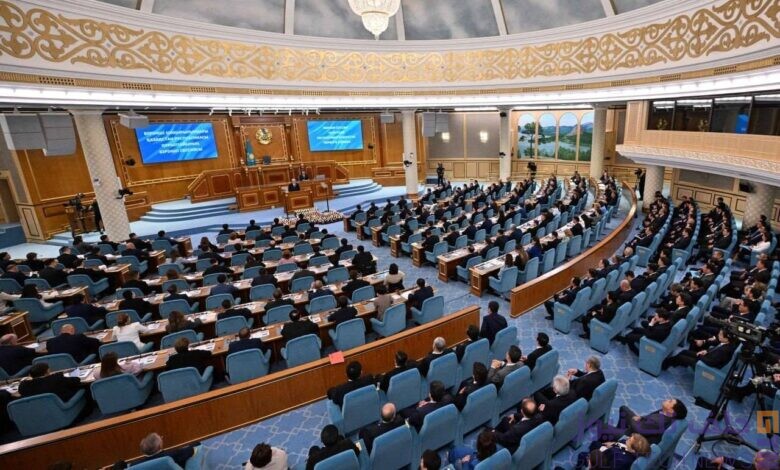
ASTANA — Kazakhstan’s newly established Qurultay has begun its historic first session, marking a new chapter in the country’s political and institutional transformation. Addressing the opening session, President Kassym-Jomart Tokayev said Kazakhstan was entering a pivotal stage of its development and opening a new page in its national history.
Tokayev also confirmed that the country’s next presidential election will be held in 2029, in accordance with the constitutional timetable. He stressed that Kazakhstan continues to maintain its international standing despite growing global turbulence and said the country would continue to protect its national interests through a foreign policy based on peace, friendship and mutually beneficial partnerships.
At the same time, the president criticized the current role of the United Nations Security Council, saying it was not adequately fulfilling its responsibility to maintain peace, stability and security around the world and in different regions.
What Comes After the Parliamentary Election?
The formation of the new Qurultay marks the beginning of the next phase of Kazakhstan’s institutional transition under its new constitutional framework.
Following the formal publication of the election results, the government moves into the next stage of the constitutional process. President Tokayev is expected to consult with the parliamentary factions represented in the Qurultay before putting forward a candidate for prime minister. Once appointed, the prime minister will have 10 days to submit proposals for the composition and structure of the government.
The process will provide an early test of how relations between the presidency, the new legislature and the executive branch will function under Kazakhstan’s new constitutional system.
From Election Campaigns to Parliamentary Work
For the five political parties that crossed the electoral threshold and secured representation in the Qurultay, the focus now shifts from campaigning to legislative work.
During the election campaign, the parties presented positions on a wide range of issues, including economic development, social protection, education, agriculture, regional development, digital transformation, entrepreneurship and environmental policy.
The new parliament will now be expected to turn those priorities into legislative initiatives and practical proposals. The parties, in turn, will face the challenge of transforming their electoral mandates into parliamentary action while maintaining regular engagement with citizens.
The key question will therefore not simply be which parties secured seats, but how effectively they use their representation and respond to the expectations expressed by voters during the campaign.
A New Institutional Relationship
The creation of the Qurultay represents a fundamental change to Kazakhstan’s parliamentary structure. The new unicameral legislature replaces the former bicameral Parliament, comprising the Senate and Mazhilis, and has become one of the central pillars of the constitutional reforms introduced in 2026.
The new system also requires a new institutional relationship between Parliament, the presidency and the government. The first months of the Qurultay’s work are therefore expected to provide an important indication of how responsibilities and powers will operate within the new constitutional framework.
International Observers Follow the New Political Phase
The parliamentary election attracted international and regional observation missions.
The Organization of Turkic States said its observers visited 32 polling stations on election day and reported no violations or interference in the work of election commissions. The mission described the voting process as open and transparent and said the necessary conditions had been provided for citizens to freely express their will.
Observers from the Parliamentary Assembly of Turkic States also praised measures designed to facilitate the participation of women, young people and people with disabilities.
The OSCE Office for Democratic Institutions and Human Rights, meanwhile, offered a more cautious assessment of the political environment, pointing to the need for greater political pluralism.
International attention is expected to continue as the Qurultay begins its legislative work and the political dynamics of Kazakhstan’s new constitutional system become clearer.
A New Stage of Political Transformation
The establishment of the Qurultay concludes a reform process that began in 2025, when proposals were put forward to restructure Kazakhstan’s Parliament, and culminated in the adoption of a new Constitution in 2026.
The reforms ended the previous bicameral parliamentary model and established a new institutional framework for the country’s political system. Following the constitutional changes, Parliament adopted seven constitutional lawsproviding the legal foundation for the new institutions, including legislation concerning the presidency, the Qurultay and the People’s Council, as well as amendments affecting the electoral system and political parties.
The August 23 election was therefore more than a vote to select a new legislature. It represented the first electoral implementation of Kazakhstan’s new constitutional architecture.
The Real Test Begins Now
The coming weeks will provide an early indication of how effectively Kazakhstan’s new political institutions can operate.
The immediate priorities include the functioning of the newly elected Qurultay, the completion of the government transition process, the appointment of the prime minister and the establishment of a practical working relationship between the legislative and executive branches.
For the new deputies, the opening of the Qurultay is not simply the start of a parliamentary term. It marks the beginning of a new institutional chapter in Kazakhstan’s political development.
Tokayev: Kazakhstan Enters a New Historical Stage
Addressing the inaugural session, Tokayev emphasized the historical importance of launching the country’s new unicameral legislature. He said Kazakhstan was entering a crucial stage of development and opening a new page in its national history.
The president said the Qurultay had officially begun its work under the new Constitution approved by the Kazakh people in a nationwide referendum.
He described August 28 as the beginning of the renewal of Kazakhstan’s political system, while recalling the historical role of Qurultays as assemblies where major issues affecting the state and society were discussed and collective decisions were made.
In its modern form, he said, the Qurultay would have a special role in modernizing the system of governance and providing fresh momentum to the work of the state apparatus.
Tokayev told the first convocation of deputies that they carried a historic responsibility and expressed confidence that they would serve the national interest and justify the trust placed in them by the people.
Kazakhstan’s Position in a Changing World
Tokayev also addressed Kazakhstan’s position amid an increasingly unpredictable international environment
.
He said global developments were becoming more complex and difficult to anticipate, while mutual trust between states, particularly major powers, was declining. At the same time, he noted that major powers with significant influence over international politics continue to listen to Kazakhstan’s position.
The president reaffirmed that Kazakhstan would continue to defend its national interests through peace, friendship and mutually beneficial partnerships.
He attributed the country’s achievements to the solidarity and unity of its people and urged citizens to move forward with confidence, avoiding internal divisions and social apathy while continuing to work for the country’s development.
Tokayev Criticizes the UN Security Council
Warning of accelerating global upheavals, Tokayev said the international system was experiencing a period of major and unpredictable changes.
“Events in the world are acquiring a chaotic, disorderly character, and it is difficult to predict what awaits us ahead. Not a single state and not a single nation has remained on the sidelines of these cataclysms.”
Against this backdrop, the president questioned the effectiveness of the United Nations Security Council.
“The UN Security Council is not coping with its mission to maintain peace, stability and security in the world and regions.”
Tokayev said the changing international environment was contributing to a growing role for regional organizations and increasing the importance of so-called middle powers, a category in which he said Kazakhstan belongs.
Artificial Intelligence and the Future
The president also highlighted the rapid development of digital technologies and artificial intelligence, saying the world still does
not fully understand where these developments may ultimately lead.
“It is unknown where this process will ultimately lead, and even current results evoke mixed assessments. At times, this is not fully understood even by those who create these technologies.”
Tokayev referred to forecasts that artificial intelligence could eventually acquire strategic significance comparable to, or potentially replacing, that traditionally associated with nuclear weapons.
He concluded that the speed and unpredictability of technological and geopolitical change demonstrated the need for countries to prepare for challenges whose full consequences may only become apparent to future generations.