

Iraq – By Aziz Al Yahya
Aziz Al Yahya is an Iraqi journalist with over 11 years of experience producing field reports and stories on cultural, social, and humanitarian issues for local and international audiences
As the technological revolution accelerates into creative fields from writing and composition to music and visual arts, a fundamental question arises about the nature of creativity, its limits, and the role of humanity: Can artificial intelligence systems surpass poets in the near future? And can a machine write poetry that rivals what the human experience produces in terms of feeling, memory, and consciousness?
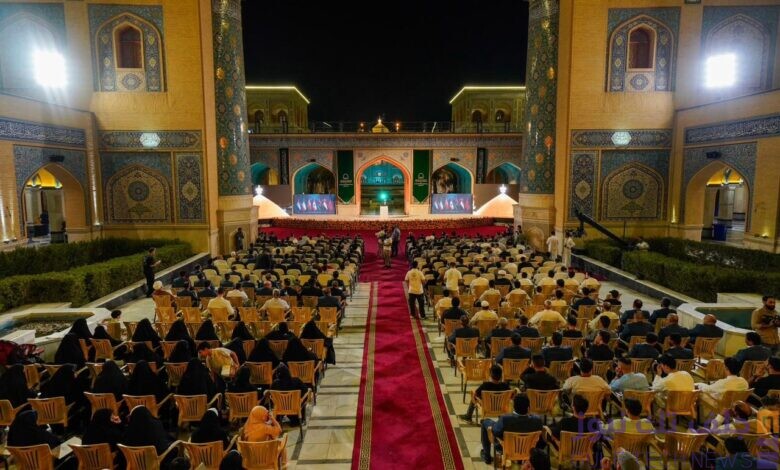
These questions are no longer theoretical. They have become present in the Arab cultural scene. From the heart of the holy city of Najaf, which houses the shrine of Imam Ali ibn Abi Talib, peace be upon him, these questions came to the surface during the fifth edition of the International Festival of the Greatest Prophet for Arabic Poetry, organized by the Imam Ali Holy Shrine as part of the International Sadiqain Week on September 1 and 2, with the participation of 14 poets representing 7 Arab and Islamic countries.
Arabic poetry, which has a long history and was the most prominent media of its time, has been translated into dozens of languages and has contributed to the spread of Arab culture. Today, as this revolution enters the realms of creativity, Arabic poetry finds itself facing a challenge of a new kind.
From within this atmosphere, Iraqi poet Zainal Al-Sufi from Mosul said: “Artificial intelligence is capable of developing its tools in writing poetry in astonishing ways and may produce beautiful and moving texts, but it will not surpass the true poet in the essence of the poetic experience. Poetry is not merely meter, rhyme, and rhetorical imagery; it is life, memory, pain, joy, and human experience. AI may imitate the poet, but it does not live what it writes about. I see it as a partner and a new tool for the poet, not a replacement. In short, artificial intelligence cannot be a poet.”
He added: “AI may produce texts that resemble poetry, but it never makes a poet, because a poet, before being a writer of text, is a person of experience, vision, a unique voice, spirit, and blood.”
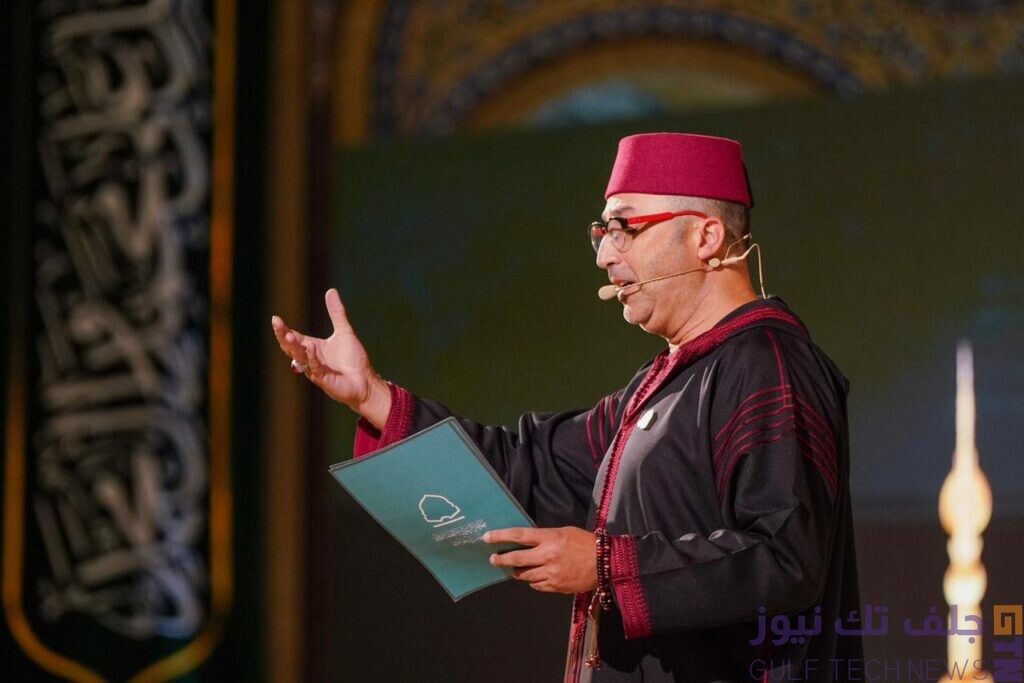
Speaking about his relationship with the city of Najaf, which embraced him after his displacement from Mosul during the war waged by ISIS on Iraq, he said: “I felt while walking through the city that I was moving through living pages of history, where the fragrance of the past meets the beauty of the present. Najaf is not only a religious city; it is a city rich in knowledge, literature, poetry, libraries, manuscripts, and heritage landmarks.”
At the festival, poets from Egypt, Lebanon, Libya, Morocco, Oman, and Iran expressed their pride in taking part in this literary event. Dr. Muhannad Jamal Al-Din from Najaf said: “The Imam Ali Holy Shrine’s celebration of the birth of the Greatest Prophet is not unusual, for entering the city of the Messenger of God begins from the gate of Imam Ali ibn Abi Talib, peace be upon him.” He added: “Celebrating this occasion within a full week draws the nation’s attention to its cultural and intellectual role and responsibility.”
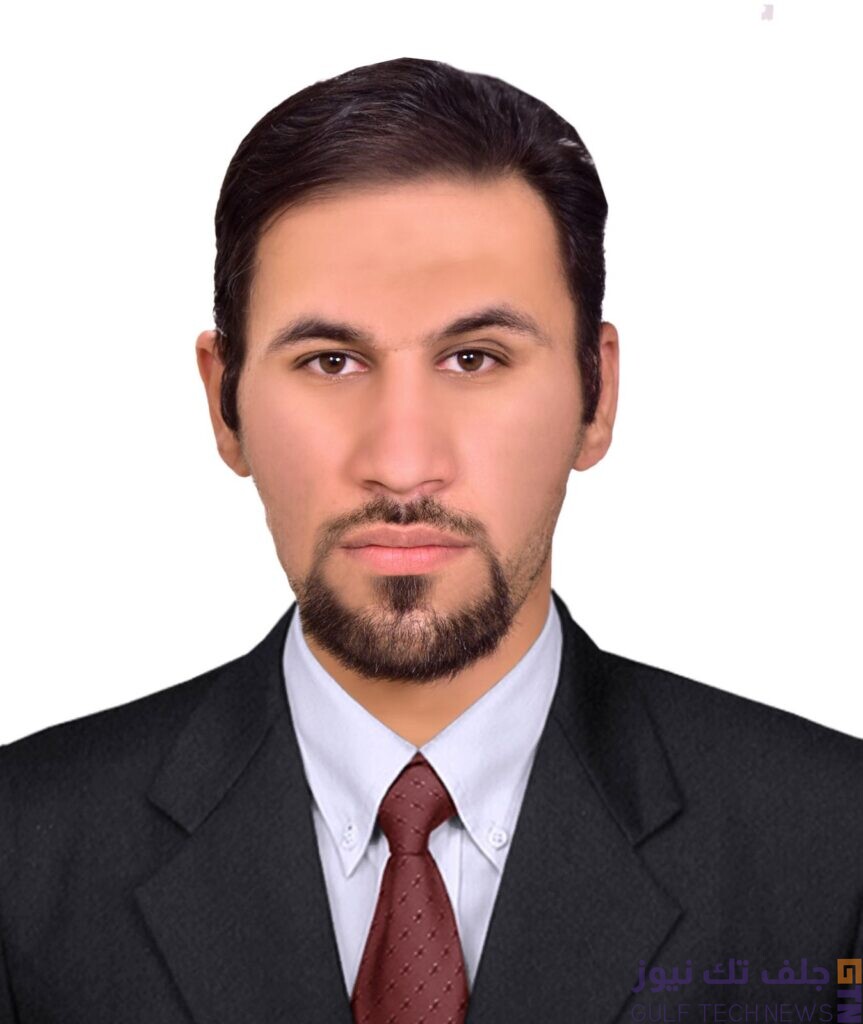
Libyan poet Ahmed Al-Fakhri said: “Being in Najaf is a great honor. Iraq is the land of poetry and poets, where the Arab poet finds an authentic space for creativity.”
On the future of language and poetry, Moroccan poet Nawfal Al-Saeedi said: “Arabic poetry will remain immortal as long as the Arabic language endures, and the Arabic language will remain everlasting as long as the Quran endures,” citing the words of God Almighty: “Indeed, it is We who sent down the Quran and indeed, We will be its guardian.” He added: “The language is protected by God through the Quran, and poetry is protected by heritage.”
Lebanese poet Mohammed Baqir Jaber believes that “the future global language will undoubtedly be Arabic, and nothing is stronger than Arabic in its rootedness and originality.”
On artificial intelligence, Egyptian poet Diaa Al-Kilani said: “In the near term, I do not think AI can surpass poets. The gap is wide between what a poet can produce and what AI produces.”
Moroccan poet Nawfal Al-Saeedi took a stronger stance, citing the Quranic verse: “As for the foam, it vanishes, [as] into nothing; but as for that which benefits people, it remains on the earth.” He added: “The essence of poetry is emotion. When you read poems altered by AI, you find no feeling. Poetry remains, above all, emotion.”
Lebanese poet Mohammed Baqir Jaber said: “Artificial intelligence, whether we like it or not, is a landmark of this era. We must make the best use of it, and let the future reveal the false from the true and the chaff from the gold.”
Iranian poet Murtada Haidari Al-Kathiri offered a critical view: “Artificial intelligence deceives the ignorant and makes him appear knowledgeable, but it cannot live a moment of pain or sorrow, nor convey sincere emotion. AI may produce a poem and no one may notice it is not yours, but it lacks the touches that simulate emotion. AI is a tool, not an end. Whoever uses it as an end will be exposed before the masters.”
The festival sessions concluded with the distribution of awards to the participating poets, amid official, elite, and public attendance. The conclusion also included a human gesture commemorating the late Yemeni poet Sayyid Al-Hadheri, who had participated in the previous edition of the festival.
Thus the question remains open: Will algorithms one day succeed in simulating the pulse of verse, or will human feeling remain beyond programming?