

Tech Breakthrough: AI “Black Box” Deciphers Autonomous Vehicle Decisions to Shape the Future of Smart Mobility


Cairo: Elias Basyony
In a significant technological development that highlights the rapid evolution of smart mobility, a research team at the American University in Cairo (AUC) is tackling one of the most complex dilemmas in the autonomous vehicle industry: engineering “ethical decisions” for Artificial Intelligence and bridging the trust gap with human users.
The multidisciplinary tech team, led by Dr. Amr El Mougy, Associate Professor at the Department of Computer Science and Engineering, recently achieved a practical breakthrough by remotely operating and navigating a vehicle (a golf cart) inside the university’s Autonomous Systems Lab. The successful test relied entirely on an Android smartphone and an active internet connection. Launched in 2023, the lab has quickly become a leading innovation hub for testing cutting-edge autonomous driving technologies.
“Reinforcement Learning”: How Do Driving Algorithms Operate?
At the core of this advancement is a comprehensive research project titled “Ethical, Trustworthy, and Autonomous: Vehicles of Tomorrow.” The project capitalizes on Reinforcement Learning—a powerful branch of AI that mimics human and animal learning processes through mechanisms of “reward and consequence”—to train smart systems to make safe decisions in highly complex driving environments.
During a recent media roundtable hosted under the “Meet an Expert” initiative, Dr. El Mougy simplified the technical concept: “If sensors are the eyes and ears of autonomous driving systems, the algorithms are the brain.” He explained that while sensors map out a live, visual representation of the environment, the AI system integrates this real-time data with the user’s destination to make split-second, critical decisions regarding steering, acceleration, and braking.
Engineering a “Black Box” for Smart Vehicles
To address the growing demands for algorithmic transparency from tech regulators and developers alike, the researchers are pioneering a “black box” tailored specifically for autonomous vehicles, drawing inspiration from aviation safety systems.
This advanced diagnostic system will document and analyze exactly how AI algorithms arrive at their decisions in fractions of a second. This is particularly crucial during system errors or when the vehicle processes conflicting sensor data, providing a vital tool for upgrading technical safety standards and liability frameworks.
Virtual Reality and the “Trust” Test
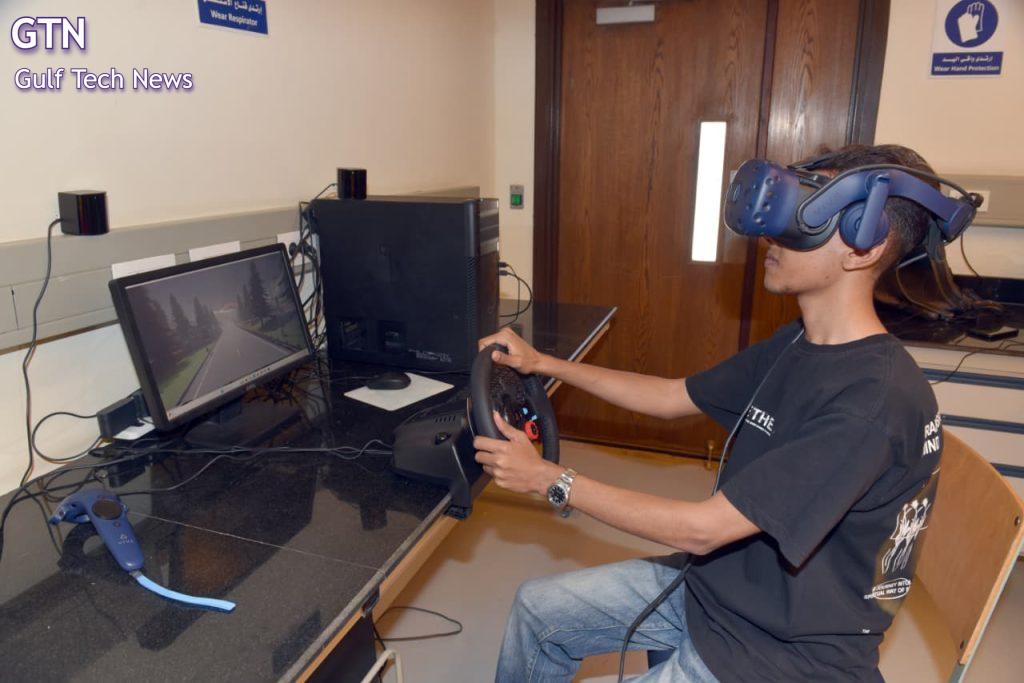
Beyond refining the algorithms, the team is heavily invested in studying human-machine interaction. To achieve this, they developed sophisticated Virtual Reality (VR) environments that simulate challenging and unpredictable driving scenarios. The simulations aim to analyze passenger responses and understand the psychological factors that dictate user trust in autonomous systems.
El Mougy emphasized that the “lack of trust” remains the highest barrier to the widespread commercial adoption of these technologies. “In every public discussion about riding in an autonomous vehicle, I always find individuals who completely reject the idea, and their justification is consistently rooted in a fundamental lack of trust in the machine,” he noted.
Strategic Financial Backing to Accelerate Innovation
Validating its deep-tech potential, the project successfully secured a $300,000 research grant in 2025 from the African Engineering and Technology Network (Afretec), a collaborative tech platform of nine universities dedicated to accelerating digital transformation.
The research team plans to utilize this strategic funding to scale up data collection and intensify algorithmic testing. These efforts are paving the way for a near future where autonomous driving technology transitions from the lab to becoming an integral component of smart city infrastructure globally.