


- 635 completed M&A deals across the Middle East in 2025, up 33% year on year, returning activity to its 2022 peak.
- 320 intra-regional transactions, up 35% year on year, accounting for around half of total regional deal activity.
- 238 inbound M&A deals, up from 182 in 2024, marking the first material rebound in foreign investment since 2023.
Mergers and acquisitions activity in the Middle East accelerated sharply in 2025, outperforming a cautious global dealmaking environment marked by selective capital deployment and heightened uncertainty.
PwC Middle East’s latest 2026 TransAct Middle East report shows regional deal volumes rose 33% year on year to 635 completed transactions, returning to 2022 levels. The region has emerged as a standout market for value-driven dealmaking, underpinned by resilient economic fundamentals, strong sovereign balance sheets and deepening regional integration, which continue to attract inbound and intra-regional capital.
This momentum reflects a structural shift in value creation across the Middle East. Rather than pursuing scale alone, investors increasingly used M&A to build capabilities, enhance operational resilience and anchor economic transformation across priority sectors.
Regional capital leads, inbound confidence returns
Domestic and intra-regional transactions were the primary drivers of Middle East M&A activity in 2025. Intra-regional activity increased to 320 deals, with the UAE (207 deals), Saudi Arabia (169 deals), and Egypt (172 deals) among the most active markets in the region. This concentration reflects the continued build-out of national champions, as governments advanced domestic capability agendas and prioritised scale, resilience, and investment depth.
Inbound M&A activity also recovered, rising from 182 transactions in 2024 to 238 deals in 2025. This marked the first material rebound after several years of decline and reflected renewed confidence in the region’s macroeconomic stability and depth of quality of investment opportunities.
AI remains the region’s strategic core
AI is emerging as a defining force in Middle East dealmaking, supported by sovereign capital and national transformation agendas. Rising demand for data processing and compute capacity is redirecting investment toward energy-intensive, asset-backed platforms, narrowing the divide between technology and real assets. Activity across data centres, cloud infrastructure and advanced computing reflects this structural reallocation of capital.
Corporates anchor activity, PE targets resilience
The shape of dealmaking also highlighted who was driving activity. Corporates led execution across the region, completing 383 transactions and accounting for around 60% of total deal volume.
Private equity participation strengthened as well, with 252 completed deals during the year. While investors remained disciplined in a global environment defined by longer holding periods, activity focused on platforms with resilient demand and strong fundamentals, particularly across healthcare, digital infrastructure and industrial technology.
Sovereigns set pace for strategic dealmaking
Sovereign wealth funds and state-backed entities continued to play a pivotal role throughout this landscape. Their involvement provided patient capital and confidence, enabling transactions tied closely to national transformation priorities. As a result, M&A was increasingly used not just to acquire assets, but to develop domestic platforms, embed strategic capabilities and accelerate economic diversification.
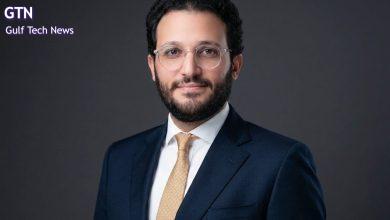
Romil Radia, Deals COO and Regional Valuations Leader at PwC Middle East, said: “Dealmaking in the Middle East is no longer about scale alone, it is being used to build ecosystems and anchor long-term economic transformation. Backed by sovereign capital, this shift is accelerating sector convergence and blurring traditional boundaries, as companies acquire the capabilities required to drive operational performance, enable new business models and ultimately accelerate innovation.”
Outlook: Capabilities drive the next phase of dealmaking
Deal activity reflects a shift toward capability-led investment, particularly across AI, digital infrastructure, and data-intensive systems. Capital has increasingly flowed toward assets that enable scale over time, accelerating the convergence of technology, industrial, and infrastructure platforms as traditional sector boundaries continue to blur.
Rather than targeting individual assets in isolation, investors focused on building interconnected systems that support reliability, efficiency, and sustained competitiveness.
As sector boundaries continue to blur and competition increasingly centres on strategic depth rather than asset accumulation, the region enters 2026 positioned to use M&A as a strategic instrument to support resilience and sustainable long-term growth.