

AUC Spotlights Research Shaping Child Health Policy for Preterm Infants in Egypt

Cairo, Egypt :
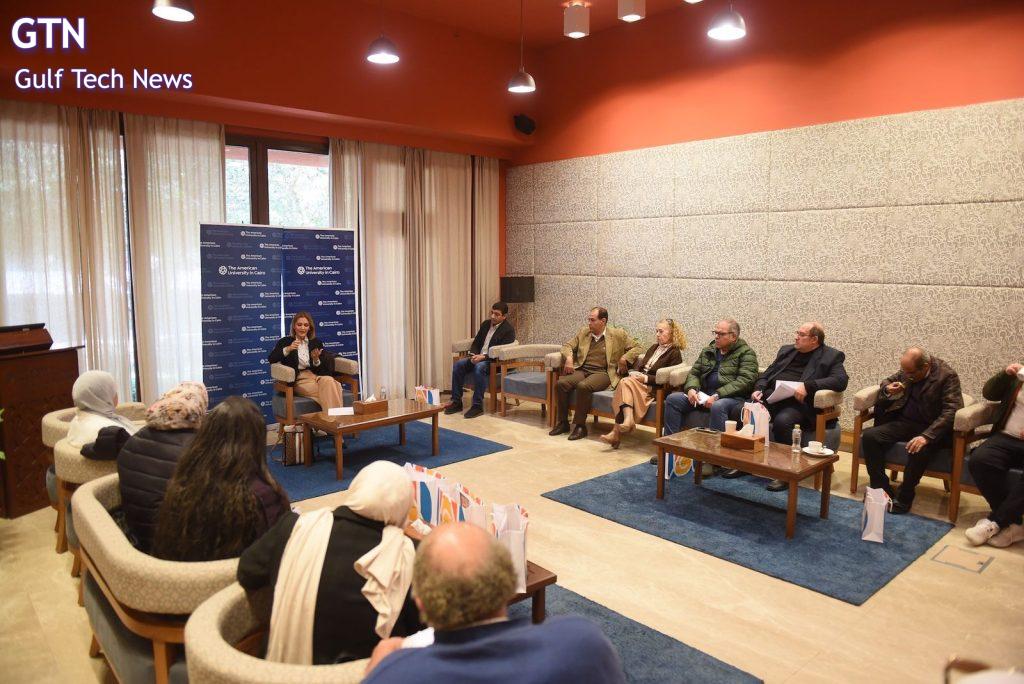
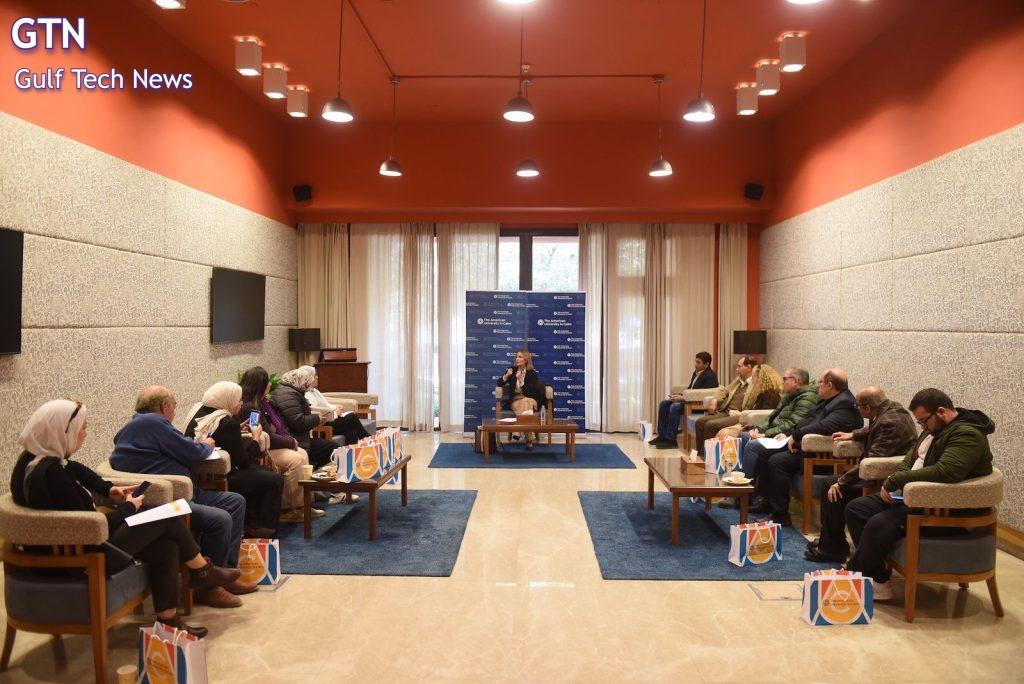
The American University in Cairo (AUC) hosted a media roundtable featuring Dr. Seham Al-Murayyid (سهام المريّض), Assistant Professor at AUC’s Institute of Global Health and Human Ecology, as part of the university’s ongoing “Meet an Expert” series. The initiative highlights faculty expertise and research with measurable community impact.
Turning global standards into real-world health policy
The session focused on translating new international standards for preterm (premature) infant growth into actionable public health policies that can benefit families across Egypt.
Dr. Al-Murayyid discussed her work on the third generation of the Fenton growth charts, a major global project she helped lead, built on data from 4.8 million births across 15 countries. She emphasized that while global evidence can set a new benchmark, data alone does not improve outcomes unless it is paired with strategic, sustained engagement among clinicians, researchers, and decision-makers locally and regionally—an approach supported by AUC.
“Through my work at AUC, I make sure research doesn’t stop at publication. I work directly with Egyptian institutions across the public and private sectors to turn global and national evidence into policies and programs that genuinely serve Egyptian families,” she said.
A high-level scientific meeting connects Egyptian clinicians with global evidence
As an example of evidence-to-practice collaboration, Dr. Al-Murayyid cited a recent AUC-hosted scientific meeting titled:
“Recent Advances in Preterm Care: Growth, Nutrition and Development.”
The event convened Egyptian clinicians and experts from public and private healthcare sectors, alongside international researchers—including Dr. Fenton, widely known for the Fenton growth charts. Dr. Al-Murayyid noted the meeting created a rare space for Egyptian doctors to discuss practical implementation questions and adapt global evidence to Egyptian clinical realities.
Toward Egypt’s first national database for preterm infants
Following the meeting, participating physicians and stakeholders aligned on a shared vision to launch Egypt’s first national database for preterm infants. Planning is underway for a pilot phase designed to collect data from hospitals nationwide to build robust local evidence.
“Our goal is a high-quality national database that reflects growth trajectories and health outcomes for preterm infants, so future clinical guidance and public policy can be grounded in local realities,” Dr. Al-Murayyid explained. “For me, that’s what turning big numbers into impact means—translating millions of global data points into better care for every preterm baby in Egypt.”
Broader child nutrition priorities: anemia and childhood obesity
Beyond preterm growth standards, AUC’s Institute of Global Health and Human Ecology is advancing community-focused research on child nutrition challenges in Egypt, including:
Iron-deficiency anemia
Childhood obesity
Dr. Al-Murayyid said these efforts are developed in collaboration with experts from Egypt’s Ministry of Health and Population and Egyptian university hospitals, aiming for outcomes that are scientifically rigorous, policy-relevant, and implementable. She also highlighted AUC’s role in convening partnerships among academic researchers, hospitals—including those affiliated with Ain Shams University and Cairo University—and relevant government bodies.
Key message: child growth is not “medical” alone
Dr. Al-Murayyid concluded with a core message: improving child growth outcomes requires more than clinical care.
“Genetics may define the frame, but nutrition, family circumstances, maternal health, education, and the environment determine where children fall within that frame,” she said. “If we want to improve child growth in Egypt, we can’t rely on clinical care alone.”
She stressed the importance of policies that address early-life stages—before pregnancy, during pregnancy, and in the first years of life—and that treat key factors together, including nutrition access and cost, caregiver and provider awareness, and supportive environments.
About Dr. Seham Al-Murayyid
Dr. Seham Al-Murayyid (سهام المريّض) is a pediatric epidemiology specialist at AUC’s Institute of Global Health and Human Ecology. Her research examines child growth and development across the life course, using data spanning preconception to early childhood.
She brings international, interdisciplinary experience across Europe, Canada, and Egypt, including analysis of national public health datasets in Canada and longitudinal studies on early childhood development under diverse social, nutritional, and environmental conditions. She has received multiple recognitions, including the Vanier Award (Canada) for her efforts and civic engagement. Her recent work includes advancing corrected-age approaches for monitoring preterm infant growth and contributing to a global reference for preterm growth based on 4.8 million births in 15 countries. In Egypt, her current focus includes family-oriented, practical solutions to reduce iron-deficiency anemia among children under five