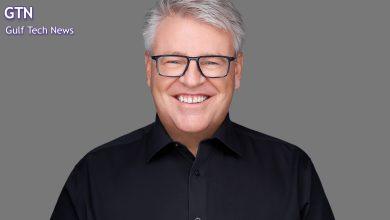



By Mohanad Yakout, Senior Markets Analyst, Scope Markets
In periods of calm, investors can persuade themselves that certainty exists. Markets rise in orderly patterns, geopolitical relationships appear predictable, and asset valuations follow rational trajectories. Yet history reminds us that stability is rarely more than an illusion.
The reality is that the global financial system is an intricate web of interdependencies, and tension in any single thread can reverberate across the entire intercontinental fabric. A review of the rising geopolitical fragmentation, supply-chain disruptions, inflationary cycles, and speed of technological change in recent years underscores the reality.
Often, against this backdrop, many investors search for a perceived haven. Traditionally, that might have meant holding cash reserves, or concentrating wealth in a single asset perceived as stable. But in today’s volatile environment, no singular investment would be likely to shield portfolios from the full spectrum of global risk. Today’s reality is that the only enduring refuge is diversification.
Gold’s renewed shine – and its limits
In the Middle East & North Africa (MENA) there is surge in demand for gold. Investors are increasingly swapping cash holdings for the precious metal, driven by persistent inflation, currency volatility, and mistrust in static cash reserves.
Yet gold alone is not a safe sanctuary. Recent disruptions, such as the Sudan flight ban affecting gold imports, have demonstrated how even the most reliable commodities can be impacted by geopolitical and logistical constraints. The lesson is not that gold is inadequate, but that any asset, when relied upon in isolation, becomes a point of vulnerability.
The uncertain world
Global uncertainty today is structural rather than episodic. Long-standing economic assumptions are being recalibrated. US–China tensions continue to reshape global trade flows and technology access. Deglobalisation pressures are pushing countries towards self-reliance, creating new winners and losers across supply chains.
Inflation cycles remain unpredictable despite aggressive policy interventions, while equity and crypto markets show pockets where valuations appear stretched, raising questions about whether speculative exuberance has overtaken fundamentals.
In such a volatile environment, trying to predict the next ‘safe’ sector, asset, or region is a risky business with the slimmest hope of success. A portfolio concentrated in a single sector or commodity – whether tech equities, crypto, or even cash – faces disproportionate risk.
Diversification, by contrast, accepts one of the most important investment truths: The future is unknown, but resilience is engineered. The savvy, modern investor understands this and amends their behaviour accordingly.
Across the UAE and wider MENA, trading culture is maturing rapidly. Investors are becoming more sophisticated, increasingly digitally enabled, and more willing to view markets through a multi-asset lens. At Scope Markets, we see this shift daily through B2C and B2B engagement: Demand is rising not just for access to global markets, but for diversified instruments that enable investors to express different views across sectors, geographies, and asset classes.
This evolution reflects a broader transformation in the UAE’s economic landscape. Digital platforms, progressive regulation, and widespread financial literacy initiatives have lowered barriers to participation, giving both retail and institutional investors unprecedented access to global and regional markets.
Understanding diversification
Diversification is no longer perceived as a defensive strategy reserved for uncertain times. It is becoming the default approach that blends assets with differing risk drivers, so the weakness of one area is offset by the strength, or stability, of another.
In my own investment approach, I apply diversification through a mix of instruments such as ETFs, which provide broad market exposure in a single trade. I also maintain cash reserves, not as a long-term holding, but as a tactical asset. Cash provides options and enables deployment during market corrections when valuations normalise and opportunities become attractive.
For many investors, diversification might span commodities, such as gold and energy; indices, reflecting major global and regional markets; blue-chip and emerging-market equities; fixed income, including sovereign and corporate bonds; cryptocurrencies as a measured component of a broader strategy; and cash, used strategically, not passively. This diversified approach does not eliminate risk but distributes it intelligently.
Technology: Busting diversification barriers
A decade ago, meaningful diversification required institutional resources or expensive global market access. Today, platforms have democratised this capability. Investors across 200 countries, including throughout MENA, can now access tens of thousands of instruments spanning equities, commodities, indices, and more. Innovations such as proprietary index contracts mirroring local market performance enable deeper, locally relevant diversification.
These products matter because they allow investors to diversify both globally and within their own region, capturing the momentum of markets such as Dubai and Abu Dhabi as they expand their role as global financial hubs.
Right Time: Wrong Approach
Many investors delay diversification, waiting instead for the ‘right time’. But timing the market is an illusion that eludes even seasoned professionals. Waiting often leads to concentration by default, resulting in overexposure to currently held assets. Diversification, however, is timeless.
By spreading exposure across multiple uncorrelated areas, investors reduce the pressure to predict short-term movements. Diversification is, in many ways, the opposite of speculation – it remains adaptive to whatever markets deliver.
In a world where supply chains can be halted by geopolitical disputes, where valuations can swing on sentiment, and where economic narratives change quarterly, investors need a diversification mindset. It is the only strategy that protects investors from a single risk and the most reliable bulwark for long-term financial resilience.