


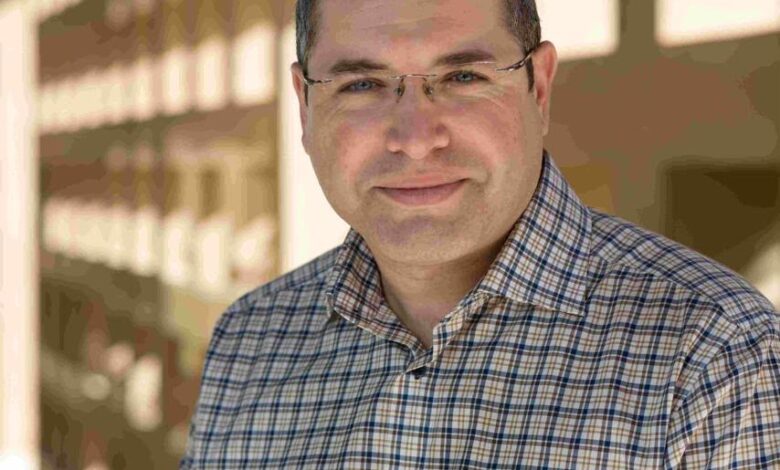
An international study led by Dr. Tamer Shoeib, Professor of Chemistry at The American University in Cairo (AUC), offers a transformative perspective on waste management. Published in Nature Sensors, the research demonstrates how discarded electronics, industrial waste, and plastics can be upcycled into high-performance materials to manufacture next-generation sensors.
The study highlights that surging global waste represents an untapped reservoir of high-value resources for modern technology.
The world generates roughly 62 million metric tons of electronic and industrial waste annually, with waste generation outpacing global recycling efforts fivefold. Yet, these discards are rich in critical metals, carbon structures, and rare earth elements necessary for advanced sensor development—technologies essential to a data-driven world across healthcare, environmental monitoring, and food security.
“The prevailing mindset treats waste merely as a burden at the end of a product’s lifecycle,” said Dr. Shoeib, lead and corresponding author of the paper. “However, these materials have already been refined, processed, and structured by previous manufacturing. Instead of depleting virgin resources through mining, we can mine landfills directly to engineer sensors that are both high-performing and inherently sustainable.”
The research team highlighted major breakthroughs across two main fronts: waste-to-value conversion techniques and the deployment of waste-derived sensors. Notably, these innovations enable the simultaneous detection of trace toxic metals like lead, cadmium, and mercury in wastewater—an achievement demonstrated by Shoeib’s research group in npj Clean Water (March 2026).
The methods also pave the way for wearable biomedical sensors capable of tracking biomarkers such as glucose and lactate.
The researchers outline an end-to-end circular ecosystem featuring localized hubs that process local waste into sensor-grade materials for public health, agriculture, and industrial safety. The cycle closes by designing sensors that are either biodegradable or fully recyclable at the end of their operational lifespan.
“The true breakthrough is not merely substituting raw materials with recycled alternatives, but engineering a closed-loop system where waste becomes the foundation for sensors that monitor and protect our planet,” Dr. Shoeib added.
The study brought together researchers from:
The American University in Cairo (AUC), Egypt
University of New South Wales (UNSW), Australia
Catalan Institute of Nanoscience and Nanotechnology (ICN2), Spain
Catalan Institution for Research and Advanced Studies (ICREA), Spain
University of California San Diego (UCSD), USA
Dr. Shoeib emphasized that scaling waste-derived technologies requires synchronized action across policymakers, industry, and consumers. He called for policy incentives and standards favoring recycled electronic components, alongside targeted investments in localized waste-refining infrastructure.
“Our ultimate goal is to move away from the extractive ‘take-make-dispose’ model toward a regenerative relationship with our world,” Shoeib concluded. “Waste itself can become the tool that monitors our planet’s health while demonstrating our capacity to restore it.”